← Essays · November 23, 2026 · 11 min read
Family Memoir Book: How to Turn Your Family's Stories Into One
A family memoir book gathers photos and spoken stories into chapters your family can hold. See how to plan it, collect the stories and print it.
Family Memoir Book: How to Turn Your Family's Stories Into One
A family memoir book is a printed collection of your family's stories, told through the photos, voices and memories of the people who lived them. The easiest way to make one is to start with photos and let each picture carry a short story, one chapter at a time. That is how The Chronicles works: you add a photo and a few words, and it becomes a written chapter you can hear, share and eventually print.
Most families do not fail at this because they lack stories. They fail because the stories live in one person's head, the photos sit in a shoebox, and nobody has an afternoon to sit down and write.
TL;DR
- A family memoir book is built from chapters: one photo, one memory, one voice at a time.
- Start with the people whose stories are most at risk of being lost, and use photos to prompt them.
- Scan photos properly and keep at least two copies in different places.
- The Chronicles turns photos and short memories into chapters, supports guided email interviews for relatives who are not tech-savvy, and prints paperback or hardback books.
- Plans start free, with paid plans at $7 or $15 a month.
Table of Contents
- What a family memoir book is (and what it is not)
- Decide whose story the book tells
- Gather and sort your photos first
- Collect the stories
- Turn the pieces into chapters
- Print it, then protect it
- A starter plan for busy families
- What the Chronicles offers
- Our perspective
- FAQ
- Sources
What a family memoir book is (and what it is not)
A memoir is a story told from lived memory. A family memoir book widens that lens: instead of one author, it holds the memories of a mother, a grandfather, a cousin, a child. It sits somewhere between a scrapbook, which is mostly pictures, and a formal genealogy, which is mostly names and dates.
There are several shapes it can take. Family Tree Magazine describes a memoir built from photos of a parent or grandparent with text drawn from their memories or interviews, an "Our family" book that works well as a gift for a child, and heirloom collections. ThoughtCo notes that most family histories are narrative, a mix of personal stories, photos and family trees, though scrapbook and cookbook formats are common too.
If your family leans toward the visual, you may like our guides to a digital family scrapbook and a photo story book. If you want the full sweep of generations, see how a family history book comes together.
Decide whose story the book tells
Before you collect anything, choose the frame. Three questions settle most of it:
- Who is the book for? A new baby, a grandmother's 90th birthday, a memorial for a parent, or the whole family.
- Whose voices belong in it? One person's life, or many people's memories of one family.
- Which stories cannot wait? Start with the oldest relatives, and with anyone whose memory or health is changing.
Writer Mallary Tenore Tarpley, in Nieman Storyboard, reflects on how details you can no longer confirm with a parent who has died, like the perfume she wore, become part of a story's texture. Choosing who and what to include shapes the book, so decide it on purpose and write down your choice.
Common starting points
- A grandparent's life story: Chapters by decade or by place lived.
- A baby's first years: Short, dated chapters from parents and grandparents. An "Our family" section introducing relatives suits a child well.
- A memorial book: Memories from many people about one person. Our memorial memory book page shows how that works in one Chronicle.
- A living family archive: A book that keeps growing. See the family legacy book.
Gather and sort your photos first
Photos are the fastest way into a story, because a face or a kitchen table makes people talk. The University of Oregon's family photo archiving guide suggests sorting by provenance, meaning which family branch the photos came from (mom's side, dad's side), then sub-grouping by decade, people, events and milestones.
Family Tree Magazine adds a practical habit: give each scanned image a descriptive file name so you can find it later.
Scan at a quality that lasts
The Fairfax County Public Library's preservation guidance recommends scanning photo prints at 600 dpi and saving a TIFF master, with JPEG for sharing. Scrapbook and book pages should be scanned at 300 dpi at minimum, and full pages captured so the context is kept.
Do not scan only the front. If there is handwriting on the back of a print, photograph that too. It is often the only record of who is standing in the picture.
Collect the stories
This is the step that makes it a memoir rather than an album. Use the photo as the question.
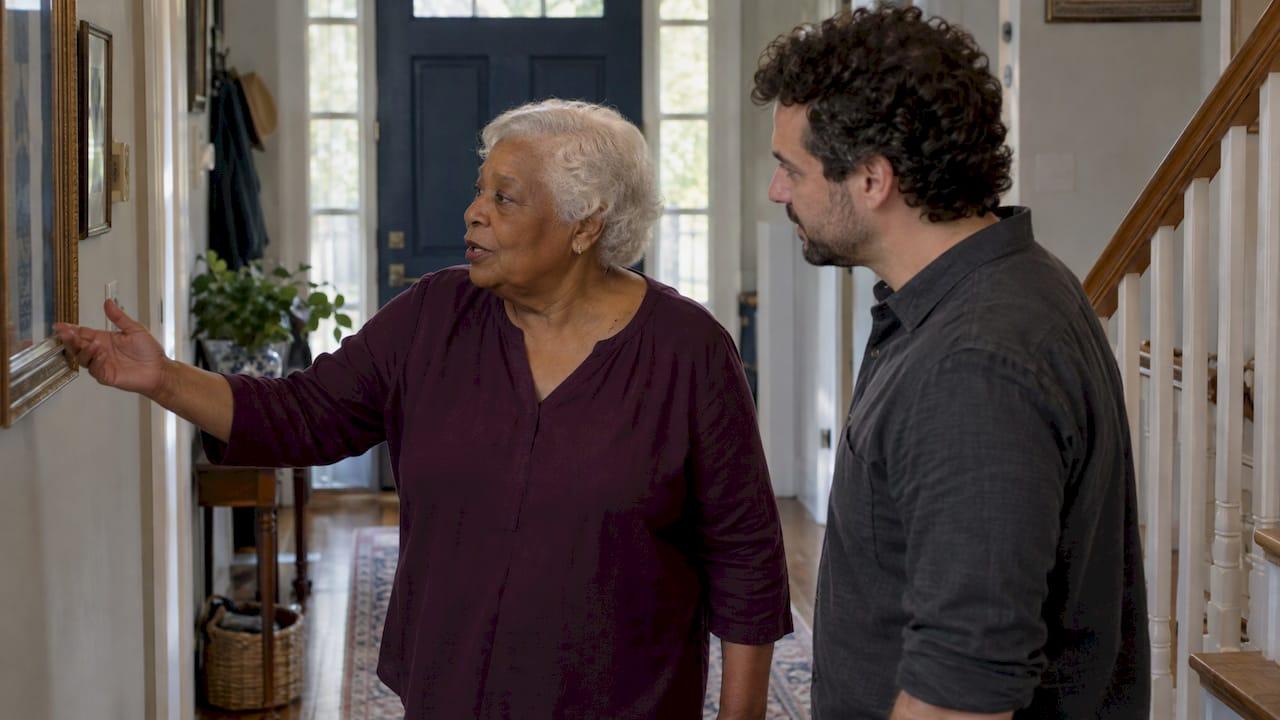
The Oregon guide offers prompts that work well: what is going on in this photo, which traditions or stories do we pass on, where did our family originate, and did anyone in the family take part in important events. The Dementia Society of America adds a technique for loved ones whose memory is fading: record them touring their home or another meaningful place, ask "tell me about" questions, follow up logically, and above all listen.
For more on interviewing, see our guides to recording a grandparent's life story and conducting an oral history interview.
Relatives who do not want an app
Not everyone will log in to anything, and they should not have to. The Chronicles supports guided email interviews, so a grandparent can answer questions in a reply, without a login, and that answer becomes part of the book. Several family members can add to the same Chronicle.
If a parent is in a nursing home or memory unit
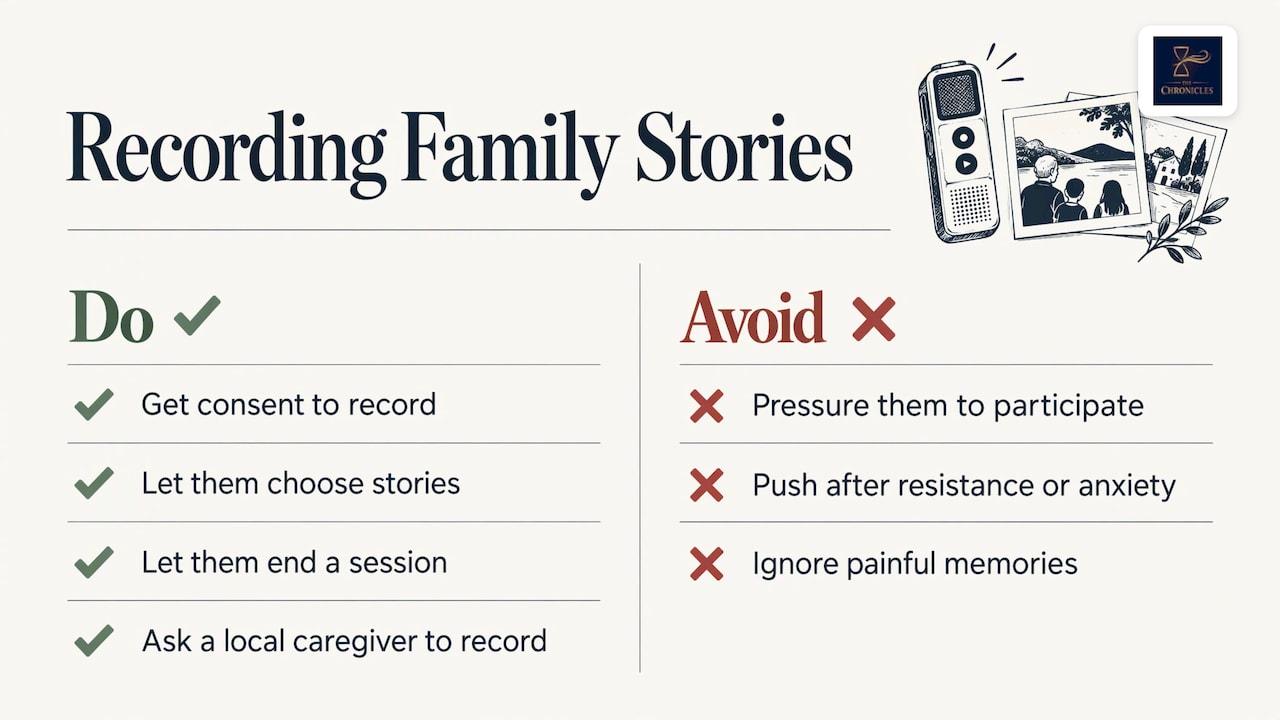
Go gently. A Kennesaw State University master's project on life story work states that nobody should be pressured into it, that the person should consent to recording and keep control over what is discussed, including the ability to end a session, and that families should begin early so the person can say which story they want told and who will see it.
Care.com, quoting a professional, advises that if a question causes resistance or anxiety you should not push, and that you should be mindful of which memories are happy and which are painful. If you live far away, a local caregiver or relative can record audio or video from a list of your questions.
A peer-reviewed evaluation of digital life storybooks for people with dementia in care homes, published in 2016 in the UK, found that five of six participants improved further on quality-of-life and autobiographical measures. It was a small study, but it shows why a personal storybook can be worth making while the person is still here to enjoy it. If you have concerns about a loved one's care or wellbeing, speak with their doctor or care team.
Hearing a loved one's own voice can matter as much as reading their words. Our guide to an audio memory book explains how narration keeps stories in their own voice. The Chronicles offers real voice narration and, with consent, voice cloning.
Turn the pieces into chapters
You do not need to write a polished manuscript. A chapter can be one photo and three sentences. Family Tree Magazine suggests drafting in a word processor before pasting into a book template, which helps if you like to write.
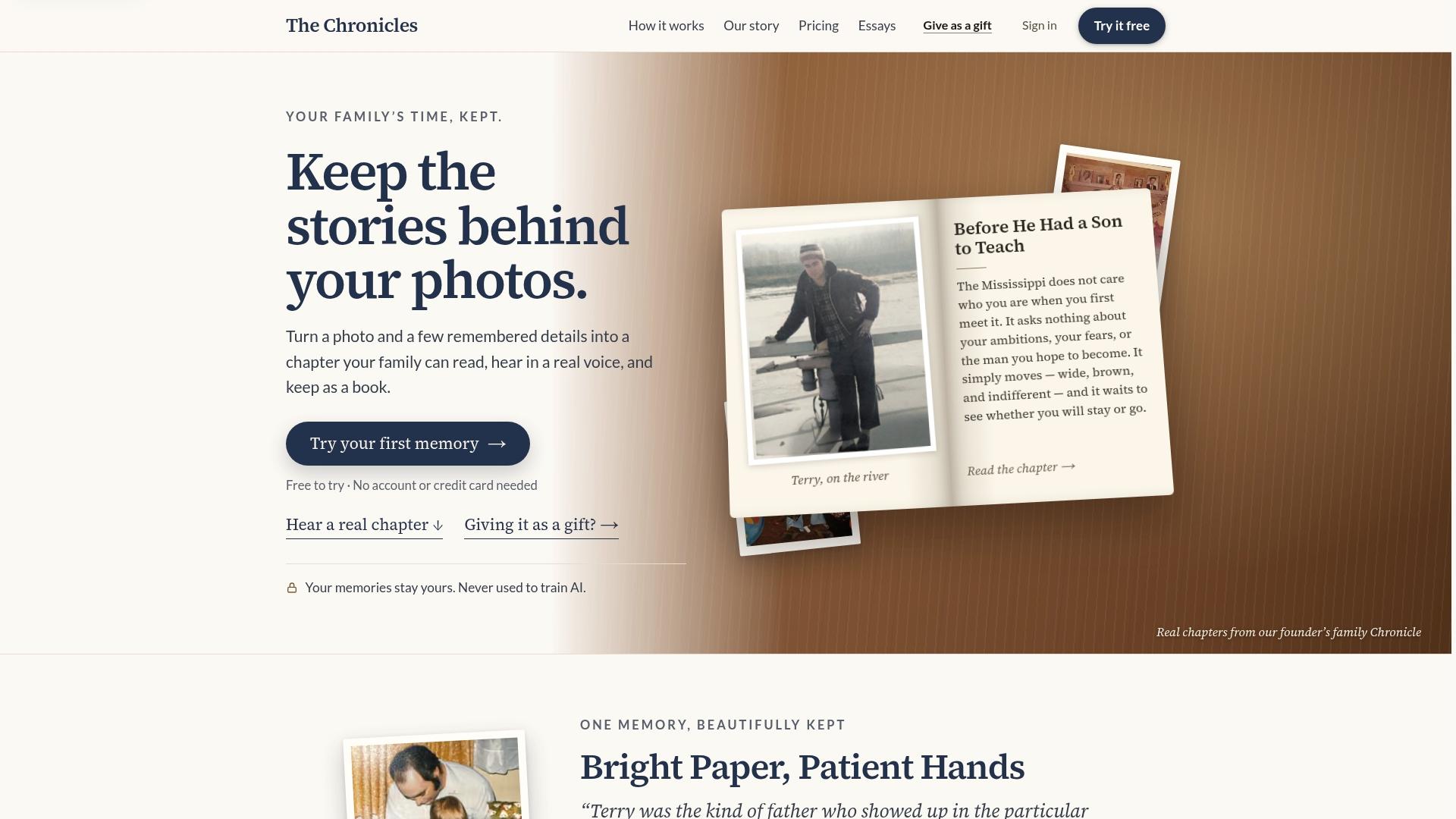
If you would rather not stare at a blank page, The Chronicles uses AI to turn your photos and short memories into written chapters. You then keep adding, so the book grows as the memories surface. Learn more about the AI memoir writer or how to write a life story from photos.
A simple chapter checklist:
- One photo, or a small group from the same day.
- Who is in it, where and roughly when.
- One memory, in the teller's words.
- One small detail only they would know: the song on the radio, the smell of the kitchen.
On privacy: our pledge is that your stories are never used to train AI, and you own your story, with easy export.
Print it, then protect it
A book you can hold changes how a family treats its stories. The Chronicles offers paperback books from $49 and hardback books from $99, each one-off, on the book page.
Keep the originals safe too. The National Archives advises storing family papers and photographs below 75°F and below 65% relative humidity, and away from damp basements, garages and hot attics. Mount photos without glue, using acid-free pages or stable plastic sleeves. Its 2023 presentation notes that labels like "acid free" or "archival" are not certified, so look for photo enclosures that passed the Photographic Activity Test.
For digital files, Buncombe County Special Collections recommends keeping at least two copies on separate media in different places, checking files once a year and making new copies every five years.
A starter plan for busy families
| Week | What to do | Time |
|---|---|---|
| 1 | Pick the book's purpose and gather 20 photos | 1 hour |
| 2 | Add a short memory to each photo | 1 hour |
| 3 | Send guided questions to relatives by email | 20 minutes |
| 4 | Review chapters, add narration, order a proof of the book | 1 hour |
The time estimates are ours, meant as a gentle pace, not a rule.
What the Chronicles offers
The Chronicles has a Free plan, a Chronicle plan at $7 per month and a Family plan at $15 per month. The paid plans cover unlimited chapters, AI assistance, narration and print book ordering. Printed books are bought separately. There are no ads and no lock-in. Start at thechronicles.life and add your first photo.
If you are comparing options, we have written side-by-side pages on Storyworth and StoriedLife.
Our perspective
We believe a family memoir should not be a chore for the one person who happens to own the shoebox. The best books we see are built by many hands: a grandmother answering a question by email, a grandchild adding a photo, a daughter recording her father's voice.
That is why we built The Chronicles around chapters, not manuscripts. A photo and a few words is enough to begin. Narration keeps the voice in the room long after the moment passes. And because your stories are never used to train AI and remain yours, the book stays within the family.
Start with one photo this week. The rest follows.
Kevin
FAQ
How long should a family memoir book be?
There is no set length. Many families begin with 15 to 30 short chapters and keep adding. A book grows naturally when relatives contribute, so aim for something you can finish and expand later.
What is the difference between a family memoir and a family history book?
A family history book leans on names, dates and relationships across generations. A family memoir leans on personal memory and voice. Many families blend both, with a family tree alongside stories.
Can I make one if my relatives are not tech-savvy?
Yes. With The Chronicles, relatives can answer guided questions by email without logging in, and you add their answers to the book.
Can I make a memorial book for someone who has died?
Yes. Gather photos and the memories of those who knew them, and group them into chapters. Our memorial memory book page explains how one Chronicle can hold them all.
Sources
- 3 Family History Book Ideas (and How to Create Them), Family Tree Magazine
- How to Write Your Family History, ThoughtCo
- So you want to write a book? The risks and rewards of memoir, Nieman Storyboard
- Telling Our Stories: Family Photo Archiving Guide, University of Oregon
- Preserving Your Memories, Fairfax County Public Library
- Memory Loss and Family History, Dementia Society of America
- Life Story Work with a Person Living with Dementia, Kennesaw State University
- Here's how to capture a senior's memories, Care.com
- Digital life storybooks for people with dementia living in care homes, PMC
- How to Preserve Family Archives, National Archives
- Planning, Techniques, and Strategies for Preserving Family Archives, National Archives
- Personal Archiving manual, Buncombe County Special Collections
Recommended
From the founder
Start your first chapter — three minutes, no account.
Drop in a photograph of someone you love. Write three sentences about a moment with them. The Chronicles writes the chapter.
Try it free →Questions or thoughts? kevin@thechronicles.life — I read everything.