Feel those moments again.Really feel them.
I finished our first chapter in about a minute, seriously.
— Mandy L.
Free to start · No credit card · No writing experience · Nothing to prepare
Your photos stay yours · Never used to train AI · Delete or export anytime In detail →
Your family's time, kept.
3 min
to your first chapter
1 photo
is all you need to start
Book ready
hardback or paperback keepsake
What makes it different
Not a record or a journal.
Using nothing more than a couple of photos and a sentence or two from you, The Chronicle delivers a literary-level chapter of that moment — with the magic of actually feeling it again. It resurrects the emotions that were present, letting readers live them as if they have traveled in time.
Three creation modes
Start from photos, a guided interview, or a memory written from scratch.
Written to be felt
Read online, share privately, or have it printed in one of our Premium hardback or paperback keepsake books.
The feeling you can't get back
What you miss most isn't the facts.
It's the feeling of being with them.
Ask anyone who has lost a parent or grandparent. What they grieve most isn't the photos — it's the feeling of being in the room with them. The Chronicles captures not just what happened, but what it felt like to be there — before that feeling is gone forever.
If you visit your parents twice a year and they're 75, you may only have 25 visits left
A letter from the founder
I spent 23 years building infrastructure at Apple, PayPal, AppDynamics, AWS, and Fannie Mae.
But I couldn't solve the one problem that mattered most.
During Covid, my father passed away alone. I never got to capture his stories. I didn't just lose him — I lost the feeling of knowing him.
So I built The Chronicles — so that what happened to me does not have to happen to you. So that when you look back at a photograph of someone you loved, you can still hear their voice.
— Kevin Inman, Founder
kevin@thechronicles.life — I read everything.
See what it feels like
Read these. Notice what happens to you.
Two real chapters. Written from photos and a few sentences. Nothing more.
July 2024
Before He Had a Son to Teach
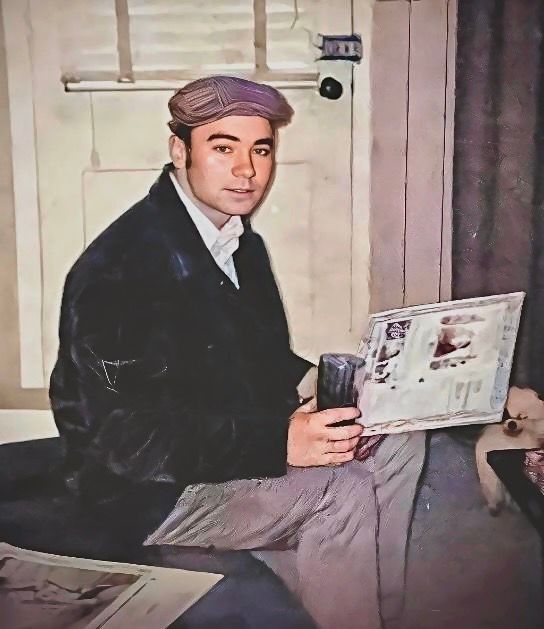
The Mississippi does not care who you are when you first meet it. It asks nothing about your ambitions, your fears, or the man you hope to become. It simply moves — wide, brown, and indifferent — and it waits to see whether you will stay or go.
Terry Inman stayed.
He was young in those photographs. Young in the way that is almost painful to see once you know everything that comes after — the decades of work, the licenses earned, the men he would one day teach to read a river the way he had once taught himself. In this image he is just a deckhand, lean and unfinished, standing somewhere along that great water that would come to define the shape of his life. He is not yet the man his son Kevin would know. He is not yet the captain, not yet the teacher, not yet the father. He is only a young man who looked at the Mississippi and decided it was worth the effort.
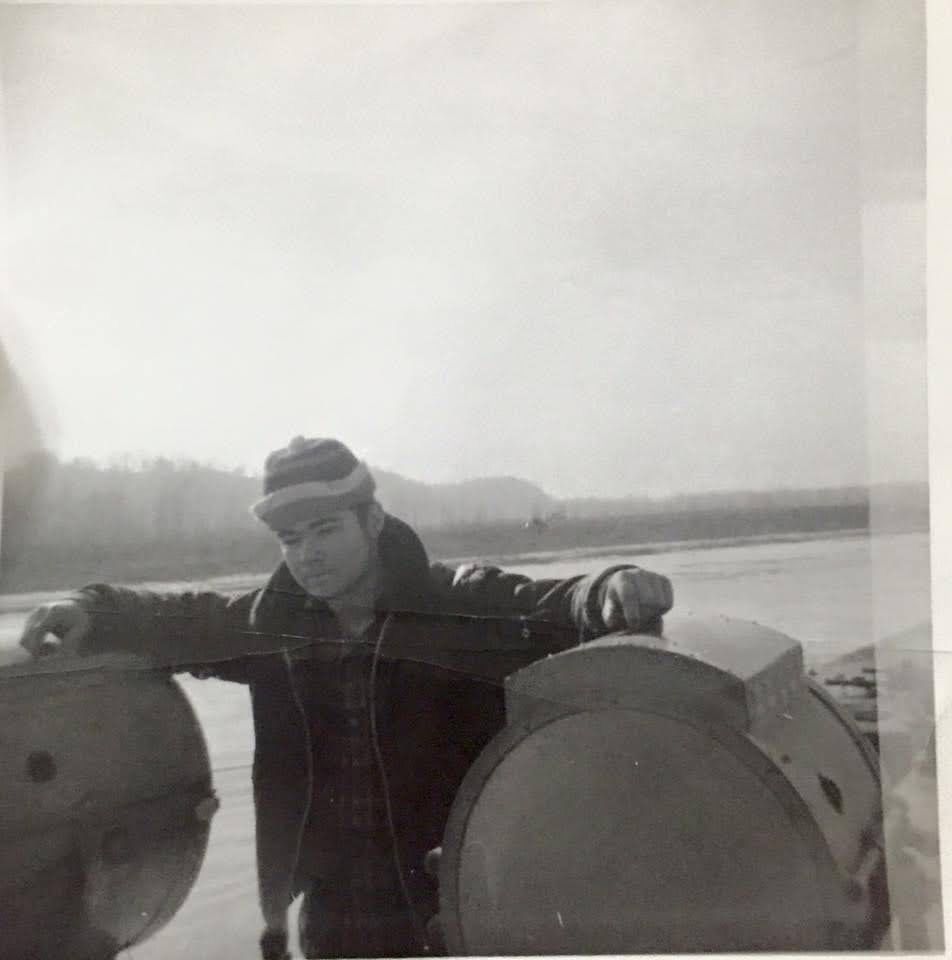
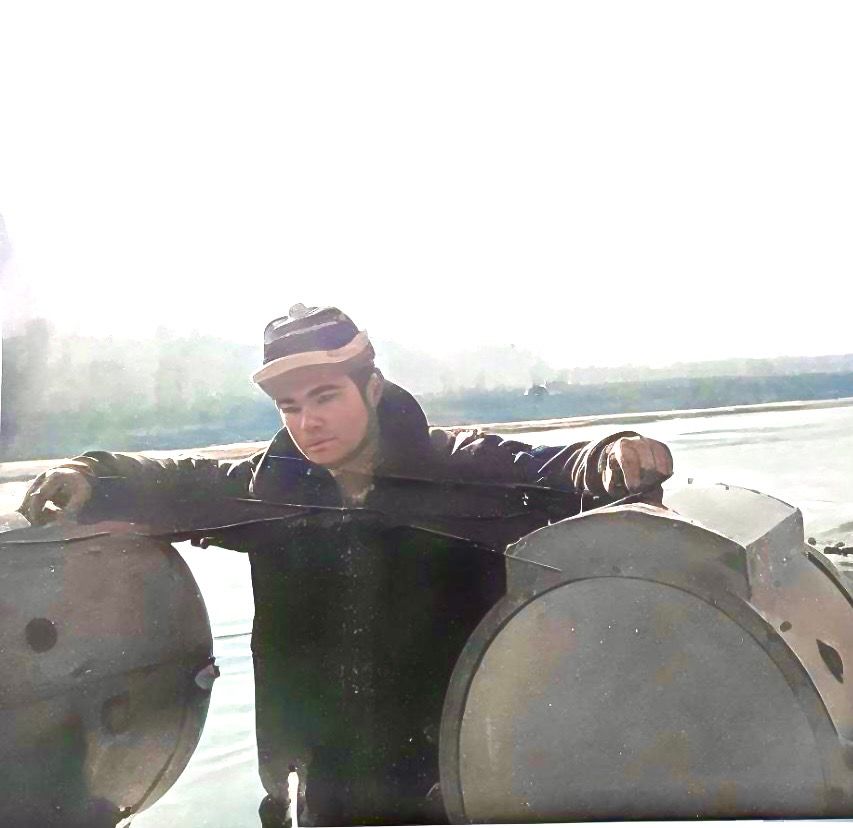
There is something quietly astonishing about photographs taken before we were loved by the people in them. They show us a version of a person that belongs entirely to themselves — before the children, before the years of accumulated responsibility, before the soft authority that comes from having earned something hard. This is Terry Inman at the beginning. A deckhand learning the language of locks and currents, of towlines and tides, of the slow muscular logic of moving cargo on a river that does not forgive carelessness. He was making something of himself, though he may not have had the words for it that way at the time. He was simply working. Simply showing up. Simply refusing to be the kind of man who gives up when the river pushes back.
On July 29th, 2024, Kevin brought his family to Grafton, Illinois, where the Illinois River opens into the Mississippi and the bluffs rise gold and green above the water. He brought Kelli, and their three boys — Ezra, Bodhi, and Holden — boys who carry their grandfather's name in their blood without ever having been old enough to fully know him. Terry had died in 2020, and grief, as any family knows, does not follow a clean schedule. It surfaces in unexpected places. It surfaces, sometimes, on the banks of the very river where a man once proved himself.
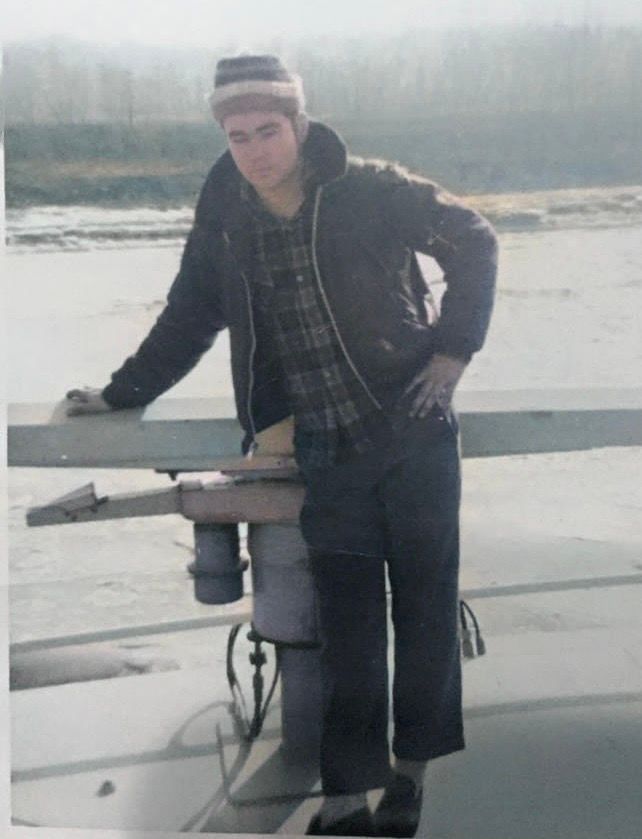
Kevin stood there with his sons and looked out at the same water his father had once worked, and the distance between then and now collapsed for a moment into something bearable, even beautiful. The Mississippi still moved the way it always had — indifferent, ancient, unhurried. But it held the memory of Terry Inman in it the way rivers hold everything they've carried: invisibly, completely, and without end. The boys would grow up knowing that their grandfather had started here with nothing but willingness, and had become, through years of steady effort, a high captain who trained others to do what he had done. That is no small thing to leave behind. That is, in fact, exactly the kind of inheritance that cannot be counted or divided — only carried forward, in the way a family stands together on a riverbank and looks out at the water and understands, without quite saying it, that they come from someone worth remembering.
A real chapter. A real family.
Read the full chapter →November 2023
Yellow Boots and Gravity
He found the puddle the way all children find puddles — with his whole body leaning toward it before his mind had made any decision at all.
It was November 11, 2023, a Saturday, and the city of Dallas stretched out beyond the edges of everything Holden knew or cared about in that moment. Up above the street, up above the noise, the Inmans had made their home in the sky. But on this particular afternoon, Holden was not interested in the view or the height or any of the things that made grown people stop and take a breath at the window. He was interested in the water sitting still and silver on the ground outside, and in his yellow boots, which had been waiting for exactly this.
Those boots. Butter-bright, the yellow of a child's crayon sun, of school buses and dandelions and cautionary signs that nobody who is three feet tall has ever heeded. Kelli had put them on his feet and somewhere in that small ritual was the quiet understanding that boots like these have a purpose, and puddles are that purpose, and there is a season of life — brief and irretrievable — when a puddle is not an inconvenience but an event.
He stepped in. The water jumped. He stepped again, harder, and the water jumped higher, and Holden looked down at what his own feet had made and something in his face opened up completely, the way a face can only open when the world has just confirmed a suspicion it has been holding since birth — that joy is available, that it is findable, that you simply have to know where to look and then go there without hesitating.
There was no one to perform for. No older brothers coaching him or competing with him, no audience arranged and waiting. Ezra and Bodhi were elsewhere, doing the older-boy things that older boys do, and for once Holden had a discovery entirely to himself. This was his puddle and his boots and his afternoon, and the city hummed its enormous indifferent hum all around him while he stood in the center of a small and perfect world.
Kevin and Kelli would not have been far. Parents are never far from a child in yellow boots near a puddle, even when they give him the gift of feeling unwatched. Somebody thought to take the photo, and somebody was right to, because the thing about moments like this one is that they do not announce their own importance. They arrive quietly, ordinary and radiant, and then they are over, and the boots come off, and the child is toweled dry and carried inside and the puddle evaporates by morning like it was never there at all.
But it was there. He was there. Small and bright and entirely himself, in the boots that were made for exactly this, outside a home perched high above a city that would never know his name the way his family knows it — Holden, the youngest, the one who found the puddle on a November afternoon and stomped into it like he was claiming something, like he already understood that the right response to a beautiful accident is not to walk around it but to step directly in.
A real chapter. A real family.
Read the full chapter →How it works
From one photo to a finished chapter
The whole process takes about three minutes. Here's what it looks like.
Step 1
Pick any photo
One is enough to start. The Chronicles quickly understands the picture and the emotions that were present
Step 2
Confirm what belongs together
Takes about ten seconds. Group the moment however it feels right — by day, by trip, by memory.
Step 3
Tell it what you remember
Two or three sentences is genuinely enough. Names, a feeling, a detail that only your family would know. That's the whole input.
Step 4
Your chapter is ready
A beautifully written chapter appears in seconds. Read it, share it privately, or save it for the printed book when you're ready.
Why it lands
It does not just save the photo.
It makes you feel that life again.
The best family keepsakes hold more than faces and dates. They hold the feeling of being in a moment — the tone, the voice, the shape of a life — while the people who lived it can still describe what it felt like.
Built differently
Not a prompt service. Not a scrapbook.
A Chronicle.
Most services send you 52 weekly questions and call it a memoir. We built something that works the way memory actually does — around photos, moments, and the people in them.
AI-native from the start
No human editors. No waiting weeks. Upload photos, answer a few prompts, and a beautifully written chapter is ready in minutes — not months.
It grows with your family
Unlike a one-time memoir service, The Chronicles is a living chapter based book that builds with you over time. Every new memory becomes a new chapter. The story never stops.
Photo-first, not prompt-first
You don't need to answer 52 questions. Drop in photos and Chronicle reads what's in them — understands the context and the moment — and writes around what you remember.
Built for the whole family
Up to five co-authors can contribute chapters, add memories, and help shape the story together. Everyone has a voice. One family, one Chronicle.
Five plain promises
What we will never do.
The kind of commitments we'd want from any service holding our family's stories — written plainly, with no caveats.
We will never sell your data.
Not to advertisers, not to data brokers, not to anyone. Your family is not the product. The only money that ever changes hands here is what you pay us directly.
We will never train AI on your photos or stories.
Your memories never enter a training dataset. They power your Chronicle and only your Chronicle. The AI that writes your chapters has read literature and history — not your family.
We will never show ads on your content.
This is not a feed. There will never be a sponsored chapter, a promoted memory, or a banner across your father’s photograph. Quiet pages, always.
We will never share anything outside your family.
No one outside your family ever sees your chapters unless you generate a private share link yourself. We don’t look in. Employees don’t read what you write. Government requests are documented and challenged.
We will never lock you in.
Export your full Chronicle to PDF at any time, even after you cancel a subscription. Your stories travel with you. We’d rather you stay because you love it than because leaving is hard.
The gift that lasts
Give them something
worth keeping forever.
The Chronicles makes an extraordinary gift for the people whose stories matter most. Start one for a parent, a grandparent, or your whole family — and give them a place to put everything they've always meant to write down.
Give The Chronicles→Free to start · No expiry · Delivered instantly
Mother's Day
The story she never got around to writing.
Baby Book
No more feeling guilty for getting halfway through it
Father's Day
His memories, finally somewhere they won't fade.
Grandparents
Before the stories exist only in your memory.
Anniversaries
A living record of everything you've built together.
What families say
Stories worth keeping
I finished our first chapter and cried when I read it back, thank you for this.
Margaret T.
grandmother of four
Now I'm able to share with my kids the story of who I was before they came along.
James R.
father of three
We ordered the hardback for my parents' anniversary. They cried. So did we.
Sofia M.
daughter
Families are writing their first chapters tonight. Join them →
From the essays
The 25-Visit Rule: Why Your Camera Roll Is Not a Legacy
If your parents are 75 and you visit twice a year, you may only have 25 visits left. Why photos preserve the image but not the feeling — and what to do about it.
Read the essay →Simple pricing
Pick the plan that fits your family
Physical book orders are separate, so you can start lightly and deepen the Chronicle when it becomes something you want to keep forever. See the printed book →
Free
forever
Up to 5 chapters, AI writing, sharing, and reading in every theme.
- ✦5 chapters included
- ✦AI chapter writing
- ✦Sharing and reading
Chronicle
most popular$79/year
Unlimited chapters, daily AI generations, narration, and book ordering.
- ✦Unlimited chapters
- ✦15 AI generations daily
- ✦Narration and print ordering
Family
$159/year
Everything in Chronicle, plus up to 5 co-authors and collaborative chapter editing.
- ✦Up to 5 co-authors
- ✦Collaboration tools
- ✦Family notifications
Common questions
Everything you'd want to know
How long does it actually take?
Most families finish their first chapter in under three minutes — from the moment they land on the app. You pick a photo, add a couple of sentences about what you remember, and a finished chapter is ready. There's nothing to set up, no account required to try it, and no wrong way to start.
Do I need to prepare anything beforehand?
Nothing. You don't need to scan old photos, dig out albums, or plan what you want to say. Any photo already on your phone works perfectly. The Chronicles reads the date and location automatically, so you don't even need to remember those. Come as you are.
Do I need to be a good writer?
Not even a little. You add a few sentences about what you remember — names, a feeling, what the day was like — and The Chronicles turns that into a beautifully written chapter. Your only job is remembering. The writing takes care of itself.
Is my family's content private?
Completely. No one outside your family can ever access your Chronicle. The only way to share is via a private link you generate yourself — you can revoke it at any time, and only someone with that exact link can view the content.
Who owns my photos and stories?
You do, always. The Chronicles never claims any rights to your content. Your memories are yours to keep, export, or delete at any time.
Is my content used to train AI models?
No. Your photos and stories are never used to train AI models. They exist solely to power your Chronicle.
Can multiple family members contribute?
On the Family plan, up to five co-authors can add chapters, upload photos, and help shape the Chronicle together. It's especially good for capturing stories from parents or grandparents who might not start one themselves — someone else can get it going for them.
When can I print a physical book?
Whenever you're ready — there's no deadline and no minimum. Some families order a book at a milestone moment like an anniversary or birthday. Others wait until the Chronicle feels complete. Either way, you can order a hardback or paperback directly from the app whenever it feels right.
What happens to my Chronicle if I cancel?
Your chapters and photos are always yours. You can export your content at any time. We don't hold your family's stories hostage behind a subscription.
For full details, read our Privacy Policy →
Still have questions? Write to us →
Every family has a story.
Now give it a place to live beautifully.
Start yours tonight — it only takes a few photos and the memory of a moment you do not want to lose.
See what one memory becomes →Or create your free account directly →
Free to start · No credit card required · Three minutes to your first chapter