← Essays · November 25, 2026 · 11 min read
A Memorial Book for a Parent: How to Make One
How to make a memorial book for a parent, whether they are living with memory loss or recently gone: what to include, who to ask, and how to print it.
A Memorial Book for a Parent: How to Make One
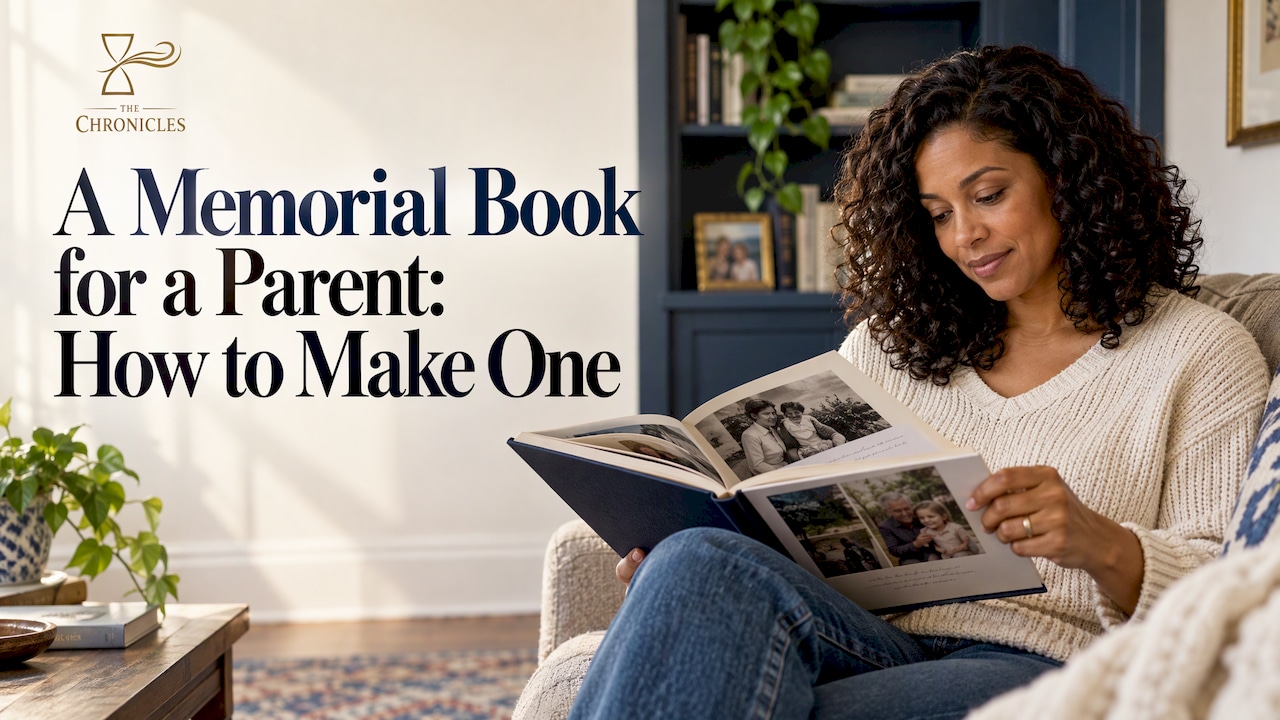
A memorial book for a parent is a collection of photos, written memories, letters and keepsakes that tells who they were, in the words of the people who loved them. The simplest way to make one is to gather the family's stories in one shared place, turn them into chapters, and print the result. That is what we built The Chronicles to do: you add photos and short memories, relatives contribute by email without needing a login, and the chapters become a book your family can hold.
TL;DR
- A parent's memorial book can hold photos, stories, letters, recipes, favorite sayings and a family tree, and it can be made after a funeral or while a parent is still here.
- Start with the stories, not the layout. Short, specific questions bring out far better memories than broad ones.
- Invite siblings, cousins and friends to each add one memory. A shared book is richer than one person's version.
- Choose a format that lasts: a printed book, with a digital copy kept alongside it.
- The Chronicles has a Free plan, paid plans at $7 or $15 per month, and printed books from $49.
Table of Contents
- What a memorial book for a parent can hold
- Start with the purpose
- Making a book after your parent has died
- Making a book while your parent is still here
- Questions that bring out real stories
- Putting the book together, step by step
- Choosing a format
- Why one shared chronicle beats scattered files
- Start your parent's chronicle
- FAQ
- Sources
What a memorial book for a parent can hold
A memory book, sometimes called a remembrance album or life story book, is a personal tribute built from pictures, written memories, letters, quotes and keepsakes. According to a funeral home's guide, it can preserve favorite sayings, life milestones, reflections from friends and family, recipes and a family tree. It can be made ahead of a memorial service or built long afterward.
Oakwood Senior Living's guide lists a few more things worth gathering:
- Photographs with captions: names, approximate dates, places and a short anecdote
- Copies of letters, postcards, certificates and recipes
- Stories and quotes in your parent's own voice
- Flat keepsakes such as ticket stubs or pressed flowers
- A family tree or timeline
- QR codes that link to audio or video of them telling a story
You do not need all of it. A book of twelve well-told chapters is worth more than a hundred unlabeled photos.
Start with the purpose
Before you collect anything, decide what the book is for. AARP's guide to helping older loved ones write their life story suggests agreeing on the purpose first: preserving stories for grandchildren, giving a parent a creative outlet, helping them relive happy memories, or bringing the family closer.
For a memorial book the purpose is usually some mix of comfort and legacy. Say it out loud to your siblings. It settles a lot of later questions, like how long the book should be and whether to include the hard years or only the bright ones.
Making a book after your parent has died
Grief makes this project both harder and more meaningful. Some things help.
Go slowly. There is no deadline. Many families begin with a single chapter, such as how Mom met Dad or the house Dad built, and add more as they are ready.
Ask everyone for one memory. AARP describes a family that asked relatives, temple friends and former coworkers to each send a favorite memory and a picture. The stories you did not know are often the ones you treasure most.
Make the request easy. Rally Takes the Train suggests sending a short, specific request with a soft deadline, and letting people reply with a voice memo or a photo instead of writing. An aunt who will never type three paragraphs will happily talk for two minutes.
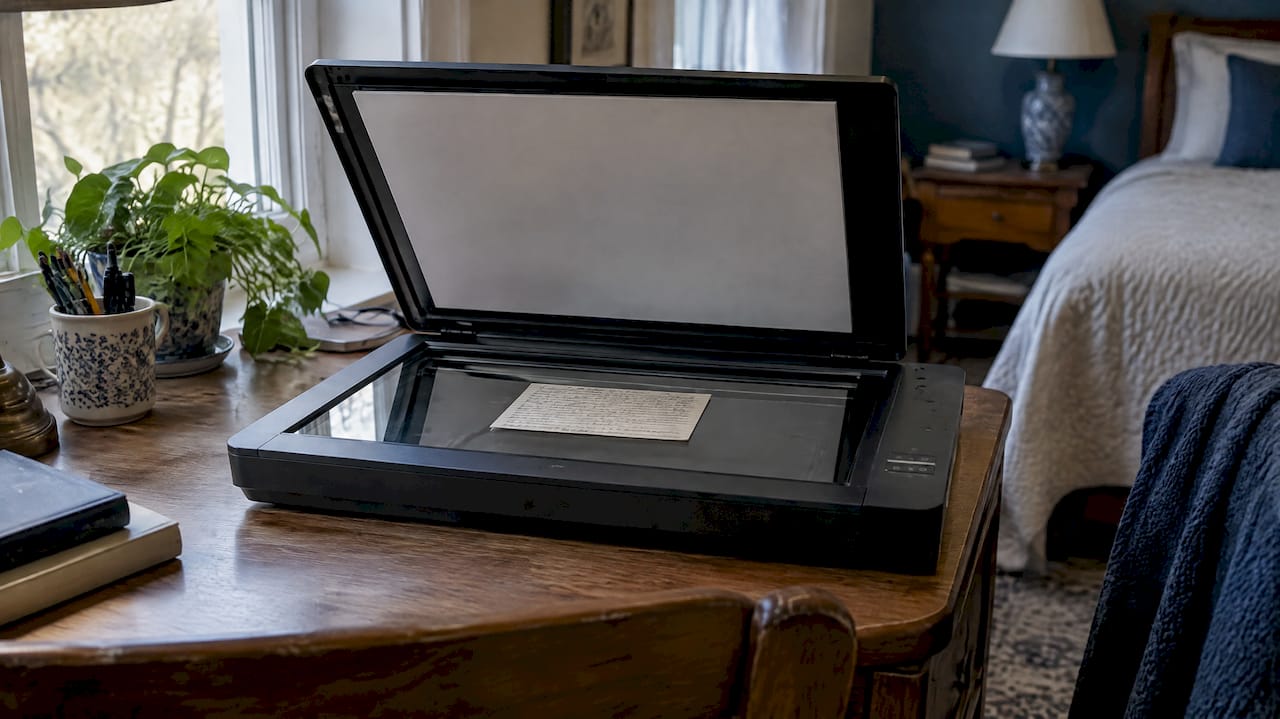
Scan before you place. Photograph or scan anything irreplaceable, especially handwriting like a recipe card, before it goes anywhere near a book.
We have more on this in our guides to making a memory book after someone dies and sharing memories after a loss, together.
Making a book while your parent is still here
Many children come to this keyword while a parent is declining, in a nursing home or in a memory unit. Doing it now is a gift to both of you.
Life Story Specialists' Terri Blanchette warns that families who postpone interviewing aging parents often find the storytellers frail, their memories faded or their voices gone. Starting is the kindest thing you can do.
When memory loss is part of the picture
The Alzheimer's Society recommends a memory book with photos and brief information about people, such as their names and how the person knows them, that someone with dementia can look at whenever they like. A study found that life story books with images and short sentences supported conversations with family caregivers and nursing home staff, with more factual statements and fewer ambiguous or incorrect ones.
Two practical points follow. Keep the sentences short and the photos large. And AARP recommends in-person interviews when a parent has cognitive problems, recorded on a phone or laptop, with phone or video calls as the fallback.
If your parent becomes upset during a session, stop and move to a happier memory. Clinicians writing about reminiscence activities for dementia advise adapting to the person's cognitive level and watching for emotional triggers. For questions about your parent's care, talk with their doctor or care team.
Questions that bring out real stories
Broad questions get short answers. AARP advises asking about specifics: instead of "tell me about your teenage years," ask who their best friend was at 16 and what the two of them loved to do.
StoryCorps' Great Questions includes prompts written for talking with a parent:
- How did you choose my name?
- What traditions have been passed down in your family?
- How would you like to be remembered?
For a parent who is not comfortable with computers, our guided email interviews send one question at a time to a relative, who simply replies. No login is needed. Our guide to recording a grandparent's life story works just as well for a mom or dad.
Putting the book together, step by step
Here is a routine that works for most families, adapted from Oakwood's eight steps.
- Set the scope. A short keepsake, a family heirloom or a digital slideshow. Pick one.
- Gather and assign. Ask each family member which photos or documents they can contribute. In The Chronicles, relatives can add to the same chronicle, so nothing gets lost in a group text.
- Collect stories. Keep sessions short and relaxed, with open-ended prompts like "Tell me about your first job."
- Select and organize. Group the material by life chapter or by theme.
- Write simple captions. Names, relationships, a rough date, one line of story. Our AI turns photos and short memories into written chapters, so you start from a draft instead of a blank page.
- Design for reading. Large fonts and plenty of white space, especially if the book will be used in a care setting.
- Produce it. We offer customizable print books.
- Share and keep adding. Memorial books are rarely finished in a day, and a digital chronicle can keep growing.
Our guide to creating a parents' life story book together goes deeper on the collaboration piece.
Choosing a format
Oakwood compares four formats: handcrafted scrapbooks, which are tactile and hold flat keepsakes but wear over time; printed photo books, which are clean, durable and easy to copy; digital slideshows or PDFs, which are easy to share and include audio or video; and hybrid printed books with QR links.
For a parent's memorial we would choose the hybrid. A printed book sits on the shelf and gets picked up on hard days. Audio carries what print cannot: the way Mom laughed, the way Dad told the story of the fishing trip. Our platform supports narration in real voices, including consented voice cloning, so a chapter can be heard as well as read. See our guide to the audio memory book.
If you are also thinking about a school or community tribute, teacher tribute pages show how a printed tribute can be built from many contributors.
Whatever you choose, keep both a physical and a digital copy, share copies with close family and store originals in archival sleeves somewhere climate-stable, as Oakwood recommends.
Why one shared chronicle beats scattered files
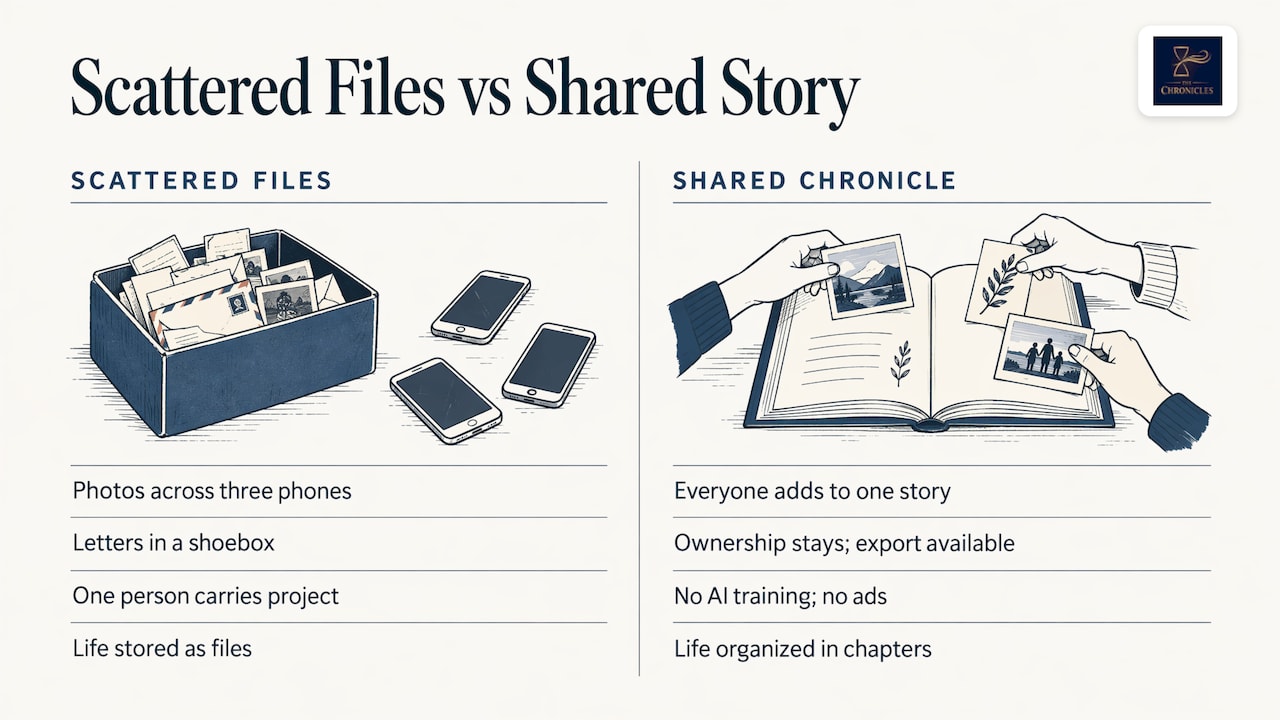
Most families already have the pieces: photos on three phones, a shoebox of letters, a sister who remembers everything. The trouble is that nothing ties them together, and the person who started the project ends up carrying it alone.
A single place where everyone adds to the same story solves that. You keep ownership of everything and can export it. Our pledge is that your stories are never used to train AI, and there are no ads. For a book this personal, that matters.
Our perspective
When someone loses a parent, the first instinct is often to save everything: every photo, every voicemail, every recipe card. The harder part is turning it into something that tells the story, not just stores it.
We built The Chronicles around chapters because a life is not a folder of files. It is a series of moments with people in them. We want a daughter in one state and an uncle who never touches a computer to both be able to add the memory only they hold, and for the family to end up with a book in their parent's own voice.
Start with one photo and one memory. The rest follows.
Kevin
Start your parent's chronicle
The Chronicles has a Free plan at $0, a Chronicle plan at $7 per month and a Family plan at $15 per month. Printed books are priced separately: Paperback from $49 and Hardback from $99. Our memorial memory book page shows how a single chronicle gathers a parent's photos, stories and voices, and you can begin on the plans page today.

When the chapters feel ready, you can order a printed book.
FAQ
What should I write in a memorial book for my mom or dad?
Start with stories: how they grew up, how they met, what they cooked, what they said all the time. Add captions to photos with names, dates and places, plus memories from siblings and friends. A short note from you on what they taught you is often the heart of the book.
Can I make a memorial book if I am not good with technology?
Yes. Relatives can contribute through guided emails without logging in, so they only need to reply to a message. You can also dictate memories and let the platform turn them into written chapters.
How long does a parent memorial book need to be?
As long as it feels right. Many families begin with a short keepsake of a dozen chapters and add more later. Choosing the scope at the start, as Oakwood suggests, keeps the project from feeling endless.
Can I make the book while my parent is in a nursing home?
Yes, and it can be a gift for both of you. Use large photos, short sentences and names of the people pictured. Visit in person when you can, keep sessions short, and talk with the care team about how the book can be used during visits.
Sources
- Creating a Memory Book for a Loved One
- Building a Personal Memory Book for Loved Ones, Oakwood Senior Living
- How to Help Older Loved Ones Write Their Life Story, AARP
- How to Capture You or Your Loved One's Legacy, AARP
- How to Make a Family Memory Book With Your Kids, Rally Takes the Train
- 21 Frequently Asked Questions About Personal Histories, Life Story Professionals
- Supporting a person with memory loss, Alzheimer's Society
- Overcoming Communication Predicaments of People with Dementia
- Reminiscence Therapy Activities For Dementia
- Great Questions, StoryCorps
Recommended
From the founder
Start your first chapter — three minutes, no account.
Drop in a photograph of someone you love. Write three sentences about a moment with them. The Chronicles writes the chapter.
Try it free →Questions or thoughts? kevin@thechronicles.life — I read everything.